Five Nursing Programs Tried PERRLA: Here’s What Happened
Five nursing programs ran full case studies with PERRLA, from a required rollout to one with no requirements at all. Here's what changed for faculty, students, and grades.
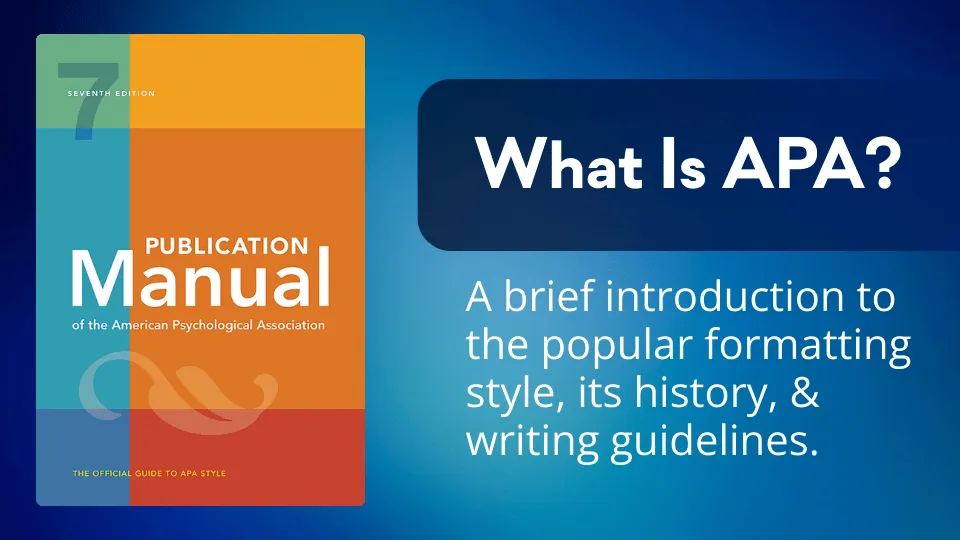
APA (American Psychological Association) Style is a standardized system for formatting academic papers and citing sources widely used in the social sciences. Founded almost a century ago, the association published its first style guide in 1929 to bring consistency to scientific writing. It is now in its 7th edition.
If your internet travels have brought you here (welcome!), you’ve probably heard “APA” mentioned in academic circles, and it’s likely you have more than a few questions. In short, APA stands for the American Psychological Association, a professional organization that’s been around since 1892. Today, though, when people say “APA” they’re usually really referring to APA Style, a system for formatting papers and citing sources predominantly used in the social sciences. It’s now in its 7th edition, and if you’ve ever taken a psychology, sociology, nursing, or communications class, you’re probably at least somewhat familiar with it.
You can think of APA Style as a set of ground rules for academic writing, including who gets credit, how content is organized, and how a research paper or discussion post is formatted. The American Psychological Association put it together so that research papers across different fields would all speak the same language, more or less.
The current version is APA 7th edition, and it was published in 2019.
APA Style can be broken down into three major parts: in-text citations, reference lists, and paper format. Let’s take a quick look at each.
APA uses an author-date format for citations. So, whenever you reference someone else’s idea or research, you’ll add a short citation in parentheses such as (Simpson, 2019). It’s a relatively simple way to acknowledge the original source and help readers locate the full reference at the end of the paper.
At the end of your paper, you list every single source you cited (minus personal communications) in alphabetical order by the author(s)’ last name(s). APA has specific rules for how to format each and every type, whether you’re citing a journal article, book, webpage, and so on.
APA Style also covers how the paper itself should look, providing rules for such elements as margins, fonts, title pages, abstract pages, appendices, and heading levels used to organize content. It’s quite detailed, but the result is a uniform document that’s more easily read (and graded).
Knowing a bit of history can help make APA Style a little less mysterious. It wasn’t designed as a headache-inducing hurdle for students. Instead, it was designed to solve a very real problem.
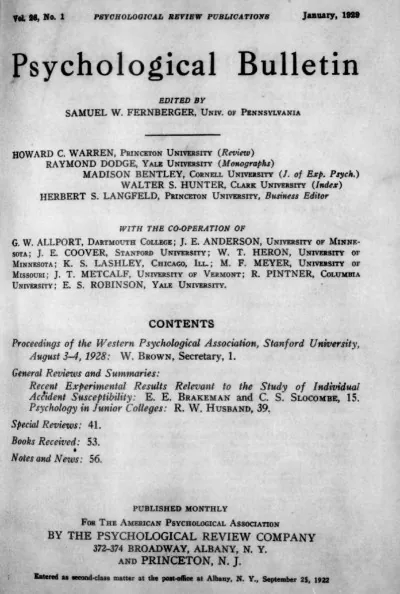
The origins of APA Style can be traced back nearly a century ago to 1929, when a group of psychologists, anthropologists, and business managers came together to say, “We need to get on the same page when it comes to writing, particularly when it comes to scientific manuscripts.” The result was a seven-page article in the Psychological Bulletin. Yes, you read that right. Only. Seven. Pages.
Scientific publishing was really coming into its own in the early 1900s, so much so that things were rapidly getting a bit … messy. Every researcher was doing their own thing, making it difficult to follow arguments, verify sources, or compare findings across different studies. In a way, APA Style was a bit of a treaty, one that provided a framework for addressing those issues. Specifically, it addressed three things:
Consistent formatting meant readers no longer had to decipher papers on a case-by-case basis and could instead focus on what really mattered: a paper’s content.
Standard citation rules made it easier for researchers to properly credit each other’s work, avoid accusations of plagiarism, and granted readers the ability to trace ideas back to where they started.
Editors and publishers could process manuscripts much faster when everything arrived on their desks in a single format. For them, APA Style resulted in less cleanup, fewer headaches, and perhaps the chance to have a sip of coffee while it was still warm for once.
The very first, full-fledged APA Publication Manual was released in 1952 and has been revised six times since. Each edition has expanded to include new research methods, new source types, and new ethical standards. Released in 2019, the 7th edition was a significant overhaul, simplifying several rules, bringing in guidance for citing social media and other digital sources, and generally making things a tad more approachable for student writers in particular.
The roots of APA Style can be traced back to that original seven-page fix for a messy, inconsistent academic writing landscape. Today, it has become the standard formatting system for the social sciences worldwide. Once you stop seeing it as an arbitrary set of hoops to jump through, you’ll recognize it as a tool for clarity and credibility. At its core, APA Style is about making research easier to read, easier to verify, and easier to build upon.
APA stands for the American Psychological Association, founded in 1892. In everyday academic life, though, “APA” almost always means “APA Style” – the association’s official guidelines for formatting research papers, references, and citations.
APA format is used for academic papers in the social sciences, think psychology, sociology, nursing, communications, and more. It covers everything from how your papers is laid out to how you cite sources and what your reference list looks like.
Today, we’re on APA 7th edition, which was released in October 2019 (and in PERRLA very shortly thereafter). It replaced the 6th edition and cleaned up a lot of the rules people found confusing, especially those involving student papers. It also offered updated formats for digital sources and new guidance on inclusive language.
Nope, but that’s a common misconception. APA Style got its start in psychology, but it’s now used across an array of fields – public health, nursing, sociology, communications, business, criminology, and more. Many universities require it for all social science coursework.
Five nursing programs ran full case studies with PERRLA, from a required rollout to one with no requirements at all. Here's what changed for faculty, students, and grades.
An annotated bibliography follows standard APA reference formatting, then adds a short paragraph below each entry summarizing and evaluating the source. This guide covers what annotations include, how to format the…
Citing a TikTok or Instagram Reel in APA 7 means treating the caption as the title – the first 20 words, preserving the original spelling and capitalization, hashtags and all. This post covers the full format, how to…
PERRLA formats the whole paper in APA 7, MLA 9, and Turabian 9, from the title page to the last reference.
Try PERRLA free for 7 days